How to Place and Care for Paintings in Your Interior: Essential Rules
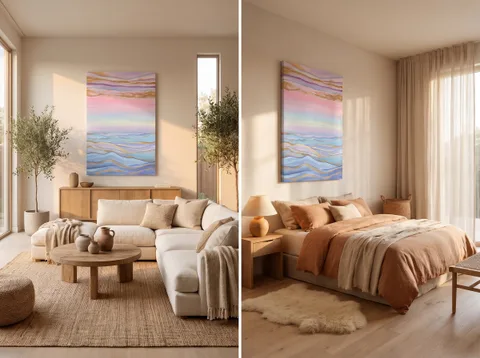
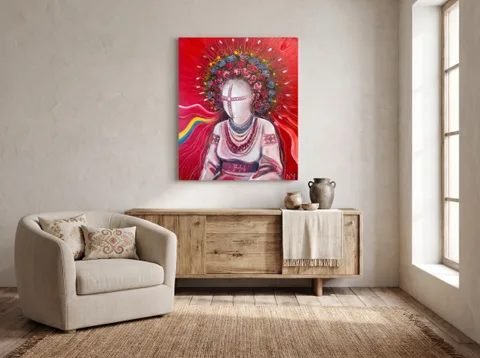
Even an exceptional painting can lose its expressive power if it is hung in the wrong spot or clashes with the scale of the room. To help an artwork truly come alive in your home and remain in pristine condition for decades, it is worth keeping a few professional guidelines in mind.
1. Scale and the Space Around the Canvas
The most common mistake when buying art for an interior is choosing a piece that is too small for the wall. A modest format on a large empty surface gets lost, making the composition feel fragmented and unfinished.
The opposite extreme—crowding a large canvas into a narrow alcove or tight corner—creates a sense of heaviness and visual clutter. A simple rule applies here: the larger and more expressive the painting, the more “air” and free space it needs around it so the viewer can step back and take it in as a whole.
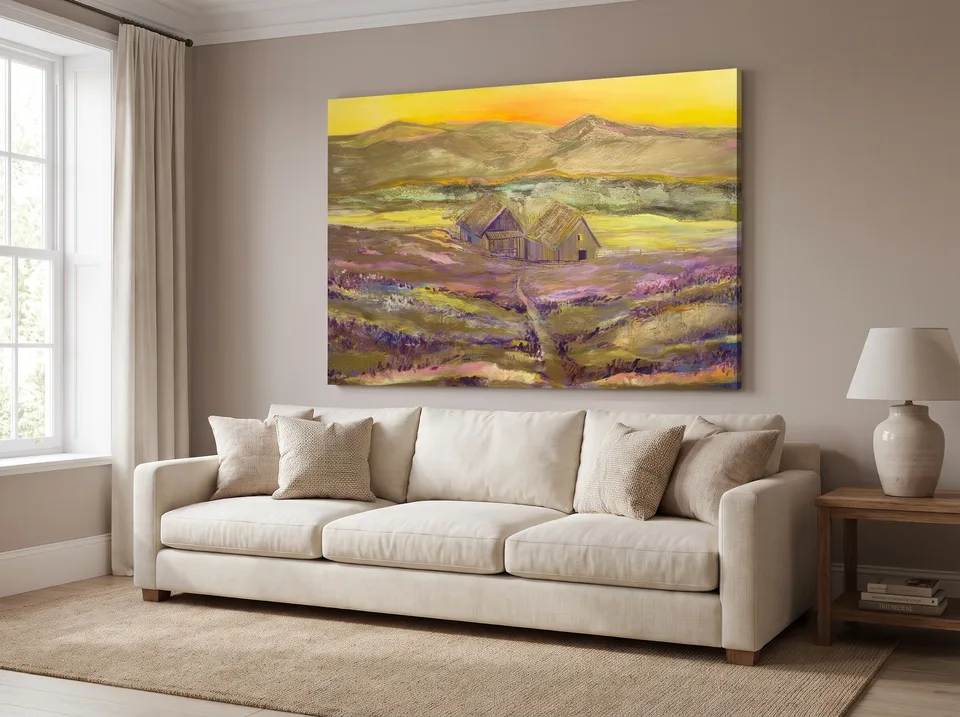
In interior design and gallery practice, two simple proportion benchmarks work reliably:
- For an open wall (the ⅔ to ¾ rule): the optimal width of a painting (or a diptych/triptych group) is roughly two-thirds to three-quarters of the free wall width. For example, on a 2-meter wall section, a canvas or composition up to 130–150 cm wide looks balanced.
- Above furniture (sofa, console, bed, or fireplace): the artwork should be narrower than the furniture beneath it—ideally about ⅔ to ¾ of the furniture’s width—with a comfortable gap of 15–25 cm above the top edge of the furniture.
2. Hanging Height: Gallery Standard
A frequent habit is hanging paintings too high, close to the ceiling. For comfortable viewing, gallery professionals align the center of the canvas at eye level—approximately 150–155 cm from the floor. In rooms where people mostly sit (such as a dining area or a lounge with low sofas), it makes sense to lower the center line slightly, to about 140–145 cm.
3. Microclimate and Care for Original Paintings
Interior magazines often show striking photos where canvases hang right above a working fireplace, over a radiator, or in a patch of direct midday sun. In real life, such placement can quickly dry out the canvas, cause micro-cracks in the paint layer, or fade pigments.
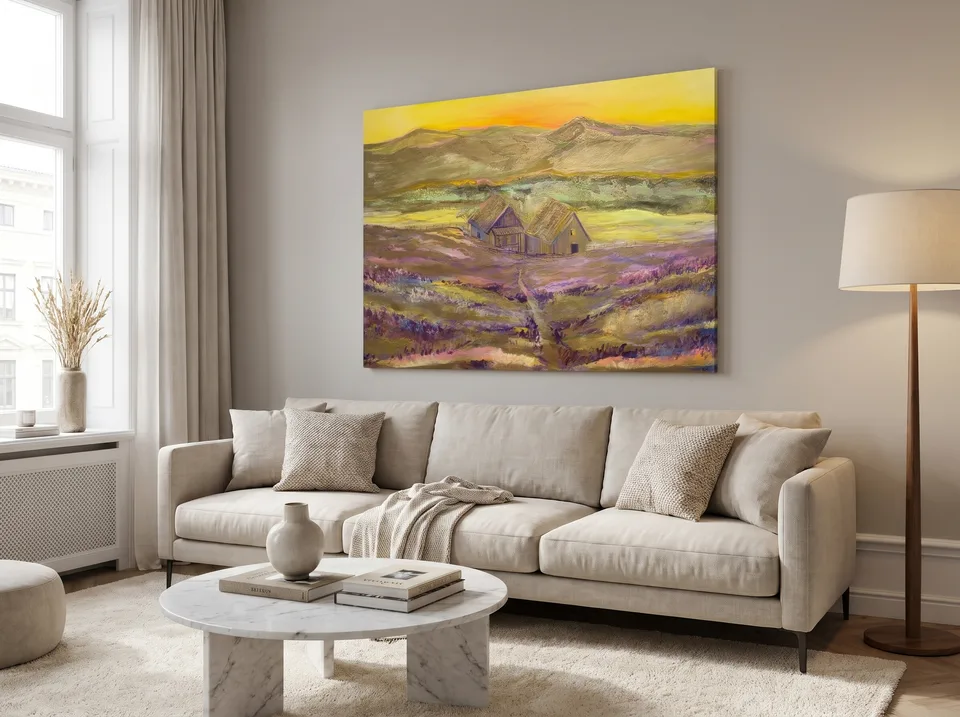
Original oil and acrylic paintings on canvas or wood are living materials. To preserve them without the need for restoration, follow these conservation basics:
- Temperature and humidity: optimal room conditions are 18–23 °C with 40–65% relative humidity. Above all, avoid sharp fluctuations.
- Protection from direct sunlight: ultraviolet light heats the surface and breaks down pigments over time. Choose walls with diffused natural light.
- Safe distance from heat and airflows: do not hang paintings directly above radiators, working fireplaces, or stoves, nor directly under air-conditioning units.
- Dedicated art lighting: if you use picture lights or ceiling spots, choose quality LED fixtures with high color rendering (CRI 90+). Unlike halogen or incandescent bulbs, they do not heat the canvas or emit UV/IR radiation.
- Clean air: avoid placing unglazed canvases in areas exposed to kitchen grease, soot, tobacco smoke, or persistent dampness.
Keeping these simple principles in mind will help you choose not only a work you love, but also the ideal size and place for it in your home. And if you need advice on scale or placement before purchasing, feel free to reach out.